
Australian knitwear sat at $89 when activewear-meets-luxury hybrids started appearing in 2021. Five years later, that category has fragmented into three tiers: heritage merino pieces under $200, designer statement knits at $320–$545, and runway hybrids pushing past $1,000. The middle ground — smart construction at accessible prices — has become harder to find.
The current range spans $95 to $1,150, with an average of $342. That average tells you nothing useful. What matters is understanding what each price bracket actually delivers, and which pieces justify their position.
What Your Money Gets You in 2026
Under $150: This tier delivers functional merino and cotton knits from Australian activewear brands expanding into lifestyle pieces. P.E Nation’s Retreat Stripe Collar Knit at $95 (down from $189) represents the accessible end — college stripes, structured collars, designed for layering over activewear or paired with denim. The construction is straightforward: jersey-weight fabric, clean seams, ribbed cuffs. These pieces work for transitional weather but won’t deliver the drape or longevity of finer gauges.
By Rosa’s off-shoulder jumper at $130 and Among the Brave’s fairisle mock neck at $140 sit in this bracket too. Both offer seasonal shapes and textural details (fairisle patterns, off-shoulder cuts) at prices that make trend experimentation low-risk. The trade-off: expect 1-2 season lifespans, not wardrobe foundations.
$150–$250: This is where Australian merino specialists operate. Mossman’s Maine Off-Shoulder Merino Top at $170 and Assembly Label’s Carina Merino Wool Cardigan at $189 deliver fine-gauge merino with design intelligence — off-shoulder cuts that stay put, button placements that sit flat, proportions that layer without bulk.
Assembly Label edges ahead here with traceable Australian merino and transparent supply chains. The construction is noticeably tighter: rolled edges instead of raw hems, reinforced shoulder seams, buttonholes that won’t stretch. These pieces survive 3-4 years of regular rotation if cared for properly (cold wash, flat dry, seasonal storage with cedar).

$250–$600: Designer territory. Alexander McQueen’s crew neck at $320 and Christopher Esber’s Banyan Bias Top at $545 occupy this space. The McQueen piece is ivory wool with ribbed details — classic wardrobe architecture priced for the logo and European manufacturing. The Esber top introduces technical bias-cutting that creates asymmetric drape without side seams. That construction premium makes sense if you value sculptural shapes over straightforward knits.
Worth noting: Esber’s Australian design credentials don’t translate to Australian manufacturing. The piece is made overseas, which positions it against international designers rather than local specialists. If you’re paying $545 for knitwear, compare against Toteme or The Row, not Assembly Label.
Above $600: Sacai’s Wool Knit X Cotton Poplin Cardigan at $1,150 represents runway hybrids — pieces that splice two garments into one construction. This cardigan grafts crisp cotton poplin panels into wool knit sections, creating visual tension between structured and soft. The appeal is entirely aesthetic: you’re buying a conversation piece, not a functional layering essential.
This tier suits collectors building statement wardrobes, not shoppers seeking price-per-wear value. For context: you could buy the Assembly Label cardigan, Mossman merino top, and P.E Nation knit for $454 — still $696 under the Sacai piece alone.

Shop Knitwear at Miss Nelly


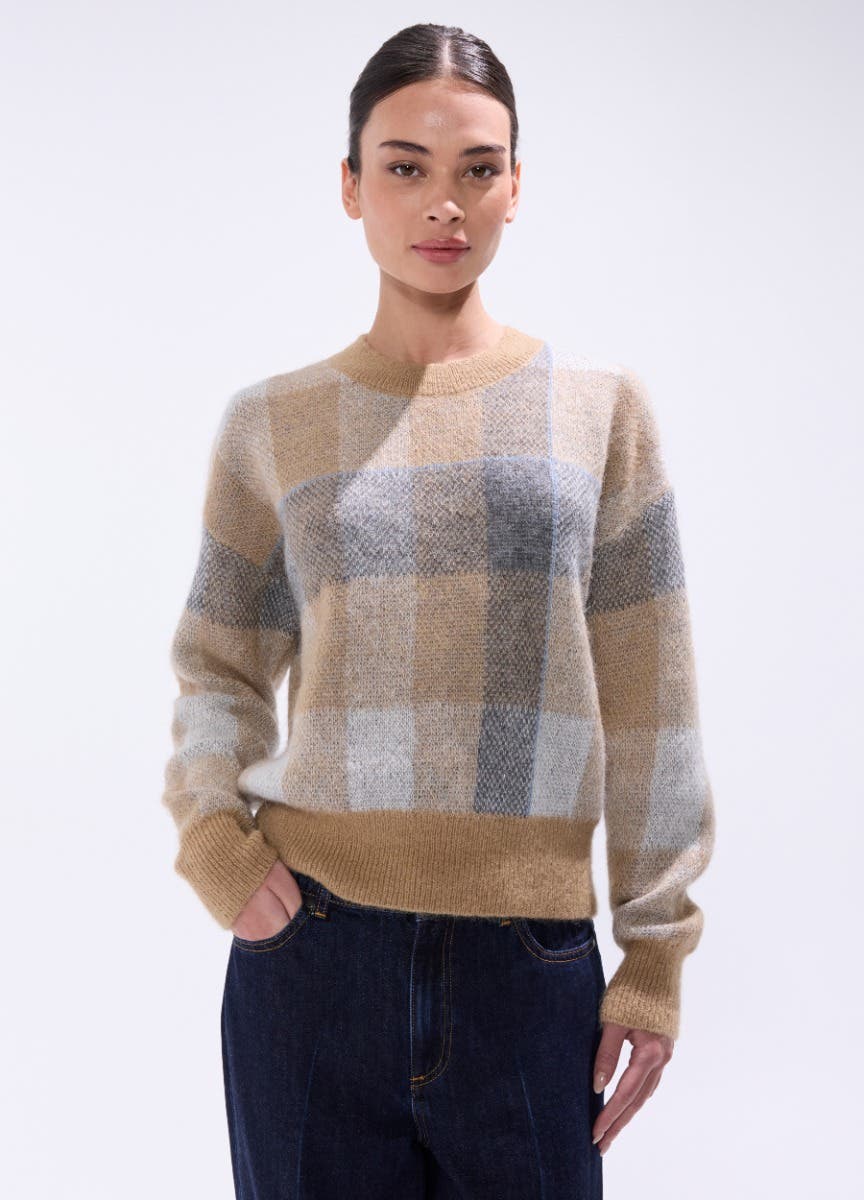


Best Buys Under $200
P.E Nation Retreat Stripe Collar Knit — $95 (was $189)
Half-price on a college stripe knit with structured collar. The cut is boxy through the body, cropped at the hip — designed to hit at high-waisted track pants or denim. Green and cream stripes keep it seasonal without skewing too preppy. Worth it at sale price for weekend layering or travel capsules. Original $189 pricing was ambitious for jersey-weight cotton.
View P.E Nation Retreat Stripe Collar Knit
Mossman Maine Off-Shoulder Merino Top — $170
Rust merino with off-shoulder styling that actually stays in place (interior gripper elastic along the neckline). The gauge is fine enough to layer under blazers without bulk, heavyweight enough to wear solo. Merino at this price point from an Australian brand with 20+ years of knitwear experience represents solid value. The off-shoulder detail keeps it distinct from basic crew necks without limiting versatility.
View Mossman Maine Off-Shoulder Merino Top
Assembly Label Carina Merino Wool Cardigan — $189
Grove green merino cardigan with traced Australian wool. The button spacing is tight enough to wear closed without gaping, loose enough to style open over tanks. This hits the sweet spot: recognizable Australian design, transparent supply chain, construction that justifies the price (reinforced buttonholes, finished seams, proportions that accommodate layering). Comparable pieces from Elk or Elk Accessories sit $20-40 higher.
View Assembly Label Carina Cardigan

When Designer Pricing Makes Sense
Christopher Esber’s Banyan Bias Top at $545 and Alexander McQueen’s crew neck at $320 operate in different value equations. The McQueen piece trades on European luxury positioning — you’re buying logo recognition and Northern Hemisphere brand cachet. The construction is solid (ribbed details, clean seams), but not meaningfully different from $200 Australian merino.
The Esber top justifies its premium through technical pattern-cutting. Bias construction eliminates side seams while creating fluid drape that moves with the body. This requires more fabric (bias cuts are material-intensive) and specialized cutting (angles must be mathematically precise to avoid distortion). The charcoal marle colourway works across seasons. The cut suits lean, straight body types — the asymmetric drape can overwhelm shorter or curvier frames.
Compare this against Assembly Label at $189: the Esber piece delivers sculptural shape and visual interest Assembly Label doesn’t attempt. But Assembly Label delivers transparent sourcing and Australian manufacturing the Esber piece doesn’t provide. The “better” choice depends entirely on whether you value design innovation or supply chain ethics more highly.

The Sacai Question
Sacai’s Wool Knit X Cotton Poplin Cardigan at $1,150 sits in its own category. This is hybrid construction: wool knit body with cotton poplin shirting spliced through the front panels and sleeves. The visual effect is layered — a shirt and cardigan worn simultaneously — without the bulk of actual layering.
The appeal is conceptual. You’re buying Chitose Abe’s signature design language (unexpected material combinations, garments that question traditional categories). The construction quality is excellent: seams sit flat where knit meets woven, buttonholes are reinforced, proportions are carefully balanced. But the functionality is limited — this is a statement piece for controlled environments (art openings, fashion events, creative workplaces), not a versatile layering tool.
For $1,150, consider what else that budget unlocks: the entire Assembly Label/Mossman/P.E Nation trio above ($454), plus $696 remaining for accessories or footwear. Or the Esber top ($545) plus the Assembly Label cardigan ($189) plus the Mossman merino ($170), still leaving $246 in reserve. The Sacai piece makes sense if you’re building a curated wardrobe of conversation pieces, not if you’re seeking maximum utility per dollar.

How to Shop Smart
Know your gauge: Fine-gauge knits (Assembly Label, Mossman) layer cleanly under tailoring and sit close to the body. Mid-weight gauges (P.E Nation, By Rosa) provide warmth without structure — better for casual layering. Chunky gauges (not represented in this selection) deliver texture but limit versatility.
Check the fiber: Australian merino at $170-$190 should specify wool origin. “Merino blend” without percentages often means 30-50% synthetic content. Pure merino regulates temperature better but requires more careful washing (cold water, flat dry, no dryer).
Consider cost per wear: Assembly Label’s cardigan at $189 worn 50 times over 3 years costs $3.78 per wear. Sacai’s cardigan at $1,150 worn 20 times over 2 years (realistic for statement pieces) costs $57.50 per wear. Both represent “value” if the wear frequency matches the investment.
Compare upward, not downward: Assembly Label at $189 sits below Bassike ($240-$280) and Bec + Bridge knitwear ($220-$260) while delivering comparable construction and transparent sourcing. That’s meaningful value. Comparing Assembly Label downward to Uniqlo or COS misses the point — you’re paying for Australian design, traced materials, and independent brand support.
Sales are strategic: P.E Nation’s 50% discount (from $189 to $95) reflects overstock on a seasonal color, not quality issues. Designer pieces like Sacai rarely discount meaningfully — if you’re waiting for a sale on the $1,150 cardigan, you’ll likely wait through multiple seasons for a 20-30% reduction at best.
Who Should Shop Where
Under $200 suits: Shoppers building transitional wardrobes, those prioritizing Australian brands with transparent practices, anyone wanting merino quality without designer premiums. Assembly Label and Mossman deliver the best construction-to-price ratio here.
$300-$600 works for: Buyers seeking sculptural shapes or design innovation (Christopher Esber), those valuing European luxury positioning (Alexander McQueen), wardrobes where each piece makes a statement. This tier requires careful curation — pieces need to justify their premium through either construction complexity or design distinctiveness.
$1,000+ is for: Collectors building edited wardrobes of conversation pieces, shoppers for whom fashion is a creative practice rather than practical necessity, those who value conceptual design (Sacai’s hybrid constructions) over versatility. This tier makes financial sense only if your wardrobe budget is unconstrained and you’re buying for aesthetic satisfaction, not utility.
What’s Missing
This selection skews toward statement pieces and designer positioning. Absent: everyday merino basics (crew necks, V-necks, turtlenecks) in neutral colors at the $150-$200 range. Also missing: Australian heritage brands like Country Road or Trenery that historically dominated accessible knitwear. Their exclusion suggests either inventory gaps or editorial focus on newer, design-forward brands.
The price jumps are stark: $189 to $320 represents a 69% increase for the McQueen crew neck, which doesn’t deliver proportional construction improvements. The gap between $545 (Esber) and $1,150 (Sacai) is even wider — a 111% premium for hybrid construction that serves aesthetic, not functional, purposes.
If you’re shopping for wardrobe foundations, stick to the under-$200 tier and prioritize Australian merino specialists. If you’re collecting statement pieces, the designer tiers deliver distinct shapes and conceptual appeal — just ensure you’re valuing what they actually offer, not paying for aspiration alone.
Related Reading
- Best Cashmere Knits Worth the Investment Australia 2026
- Best Australian Fashion Brands 2026
- BASSIKE: Premium Sustainable Fashion
💌 Get the Weekly Style Edit
Curated fashion picks, new brand alerts, and sale notifications. Delivered every Wednesday.
Liked this?
Read our Spring 2026 Style Report — then get picks like these every Thursday from 800+ brands.
Join The Edit →