
Open any wardrobe in Melbourne or Sydney right now, and you’ll find at least one piece with that familiar logo. The North Face has moved far beyond its technical mountaineering roots — it’s become shorthand for effortless layering that works whether you’re walking the dog or meeting friends for coffee.
Here’s what makes the brand worth the space: it delivers on warmth without bulk, weather-resistance without stiffness, and that worn-in durability that only comes from proper construction. The price range sits between $98 and $315 AUD, with most pieces landing around $207. That’s not Uniqlo territory, but it’s also not Arc’teryx. You’re paying for gear that lasts years, not seasons.
The catch? The North Face doesn’t do minimalism. If you’re after sleek, logo-free basics, brands like COS or Jac + Jack make more sense. But if you want layers that work hard — puffer vests that pack down small, fleece that breathes, shells that actually keep rain out — this is the wardrobe to build.
The 5 Pieces Worth Owning

The Hydrenalite Down Vest
Start here. The Hydrenalite Down A-Line Vest at $189 (down from $270) is the most versatile piece in the current range. It’s cut longer than the standard puffer vest — hits mid-hip rather than waist — which means it works over jumpers and under coats without creating weird bulk lines.
The A-line shape skims rather than clings, and the water-resistant shell handles Melbourne’s unpredictable drizzle without turning stiff. This is the piece you throw on for school pick-up, Saturday markets, or layered under a trench when temperatures drop. Worth noting: the down fill is recycled, which doesn’t affect warmth but does make it lighter than older models.
The Denali X Jacket
If you’re going to invest in fleece, make it the Denali X at $280 (regular $400). This isn’t the scratchy polar fleece from the ’90s — it’s a high-pile Sherpa with reinforced shoulders and chest panels in wind-resistant nylon.

The difference between this and a standard fleece pullover: structure. The Denali holds its shape after washing, the zip doesn’t snag, and those nylon panels mean you can wear it as an outer layer on windy days without feeling exposed. Pair it with straight-leg denim and sneakers, or layer it under a parka when winter hits properly. The fit runs slightly boxy, which works if you’re layering but size down if you want it closer to the body.
The Retro Denali Jacket
At $231 (down from $330), the Retro Denali sits somewhere between the Denali X and a standard fleece. Same high-pile fabric, but without the reinforced panels — which makes it lighter and softer, but less wind-resistant.
This is the one for layering under coats or wearing indoors when your house is cold. It’s also the better option if you prefer a slimmer fit, as the lack of reinforcement panels means it drapes closer to the body. The standout feature: elastic cuffs that actually stay put and don’t stretch out after a season.

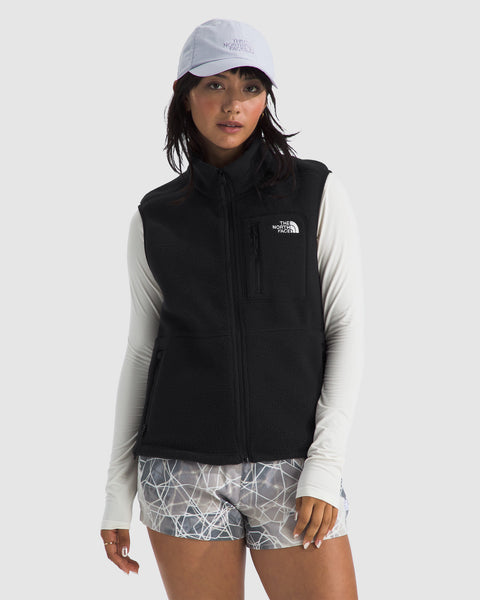
The Yumiori Fleece Vest
The Yumiori Vest at $98 is the entry point. It’s simple: high-pile fleece, zip front, two pockets. No bells, no extra panels, just a solid layering piece that works over long-sleeve tees or under denim jackets.
The fabric is lighter than the Denali range, which makes it better for spring and autumn rather than deep winter. It’s also the piece that travels well — packs down smaller than a puffer, doesn’t wrinkle, and dries quickly if you get caught in rain. The fit is relaxed without being oversized, which means it layers neatly without adding bulk.
The Hyalite Vest
For those who need something more technical, the Hyalite Vest at $259 (regular $370) is a proper down puffer with a hood. The down fill is packable — the whole vest stuffs into its own pocket — and the shell is treated with DWR (durable water repellent), which means light rain beads off rather than soaking through.

This is the vest for weekends away or early morning walks when temperatures are single digits. The hood adds warmth without weight, and the longer length (mid-hip) means your lower back stays covered when you bend or reach. One quirk: the armholes run slightly high, which can feel restrictive if you’re wearing thick jumpers underneath. Layer it over thin knits instead.
How to Style Each Piece
The North Face works best when you don’t try too hard. These pieces are designed to be thrown on, not styled into elaborate outfits. Here’s what actually works:
- Hydrenalite Vest: White tee, black straight-leg jeans, white sneakers. Or layer it under a long wool coat when temperatures drop below 10°C.
- Denali X Jacket: Grey crew-neck jumper, dark denim, Chelsea boots. The jacket has enough structure to work as your main layer — no coat needed unless it’s raining.
- Retro Denali: Ribbed tank underneath, high-waisted cargo pants, chunky-sole trainers. The softness of the fleece balances the utility vibe of cargos.
- Yumiori Vest: Striped long-sleeve tee, light-wash jeans, slip-on Vans. Keep it simple — this vest is a neutral, not a statement piece.
- Hyalite Vest: Black leggings, oversized sweatshirt, running shoes. This is your workout-to-coffee layer, not a going-out piece.
What Pairs With What
The beauty of The North Face is that everything layers together without looking try-hard. The vests work under the jackets when temperatures drop below 5°C. The Yumiori fleece layers neatly under the Hydrenalite puffer without creating bulk. The Denali jackets work as outer layers in dry weather or middle layers under a shell when it’s wet.

For building a capsule: start with one vest (the Hydrenalite if you want versatility, the Yumiori if budget matters), add one fleece jacket (the Denali X for structure, the Retro Denali for softness), and you’ve covered autumn through winter. Everything works with the same basics: white tees, black tees, grey knits, dark denim.
One note on colour: black is the safest bet for resale value and long-term wear. The seasonal colours (smokey brown, midnight petrol, algae blue) look good now but can date quickly. If you’re spending $200+, stick with neutrals.
Where to Find Deals
The North Face rarely goes on deep discount, but there are patterns. End-of-season sales in March and September typically bring 30-40% off, which is when you’ll find pieces like the Hydrenalite Vest at $189 instead of $270. General Pants and The Iconic run the most consistent sales, while Catch and The Market occasionally stock past-season pieces at steeper markdowns.
Worth checking: outlet stores in places like DFO Moorabbin or Birkenhead Point often carry previous season’s colours at 40-50% off. The quality is identical — you’re just getting last year’s shade of navy instead of this year’s.
If you’re buying at full price, make sure it’s a core piece (black Denali, black Hydrenalite) that won’t look dated in three years. Seasonal colours and limited-edition prints are fine if you find them on sale, but not worth paying full retail.
Who This Brand Is Not For
If you want pieces that blend into the background, The North Face isn’t your brand. The logo is prominent — chest, sleeve, or back — and there’s no subtle version. Brands like Patagonia offer similar technical quality with more understated branding. Uniqlo delivers functional puffers and fleece at half the price, though the durability isn’t comparable.
The North Face also doesn’t do tailored. These pieces are designed for movement and layering, which means they’re cut with extra room. If you prefer close-fitting, body-skimming layers, look at Arc’teryx or lululemon instead.
And if you’re after fashion-forward cuts or trend-led design, this isn’t it. The North Face does the same silhouettes year after year, with minor tweaks to fabric or colour. That’s the point — these are wardrobe workhorses, not statement pieces.
Related Reading
- Ode: Coastal Brand Taking Over Australian Wardrobes
- A Closer Look at Coach: What’s Behind the Label
- Viktoria & Woods Explained: What Your Money Actually Gets You
Liked this?
Read our Spring 2026 Style Report — then get picks like these every Thursday from 800+ brands.
Join The Edit →