At $147, Boden’s Thea Mary Jane ballet flat costs less than a single dinner tab at a Melbourne CBD wine bar. At $2,110, Khaite’s Jane ballerina flat sits at the opposite end of the same trend — a spread of nearly $2,000 for a silhouette that, structurally, hasn’t changed since the 1950s. That gap is the story of balletcore right now: a trend accessible enough for a weekday flat rotation, and expensive enough to function as a genuine investment piece for those who want it.
Why the Flat Is Winning Over the Sneaker
Balletcore isn’t new — it resurfaces every few years — but this cycle has staying power because it’s arriving as a direct counter-reaction to a decade of chunky trainers and platform boots. Runway houses have spent the last two seasons pushing low-vamp, ribbon-detail, and Mary Jane flats back into rotation, and the effect has trickled down fast: what used to read as a niche ballet-adjacent aesthetic is now showing up as a genuine daytime alternative to sneakers, especially in cities where the commute is short and the dress code has loosened.
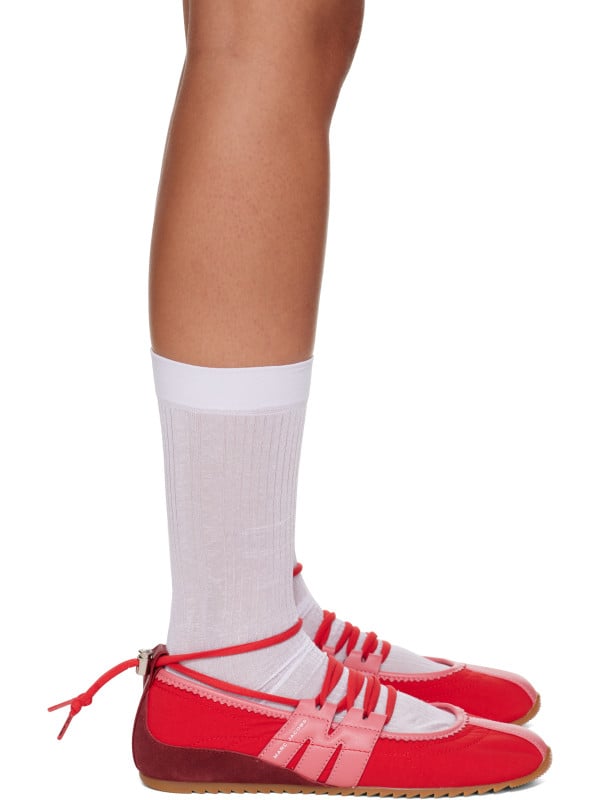
The Marc Jacobs ‘The 400 Bleeckerina’ Ballerina Flats at $465 sit right at the centre of this — the red and pink colourway leans into the trend’s playful, slightly girlish register rather than trying to disguise it as something more serious. That’s the tell for how this trend is being worn: not as a quiet nod to ballet, but as an unapologetic, colour-forward statement.
The Mary Jane Strap Is Where the Trend Peaks
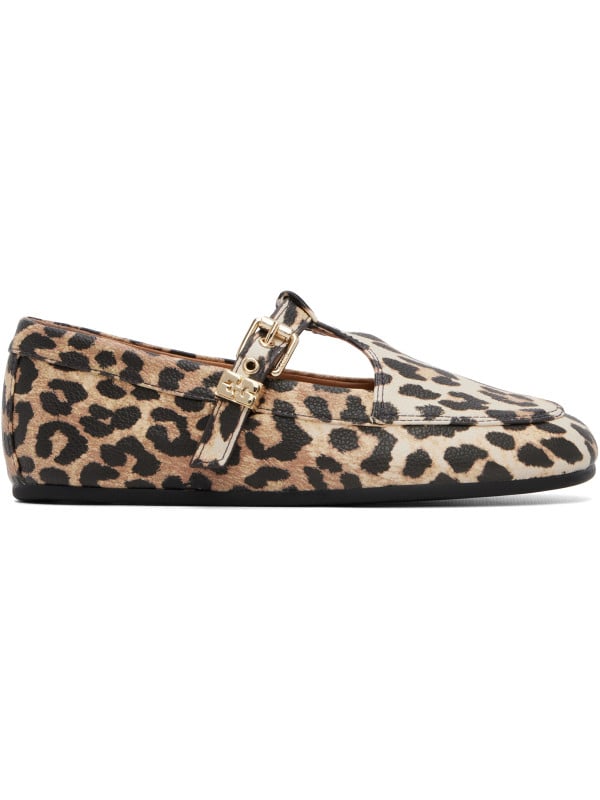
Of the pieces in this range, the Mary Jane variation is doing the most work. It’s the detail that separates a plain ballet flat from something that reads specifically as balletcore rather than just “flat shoe.” Ganni’s Beige Mary Jenny Ballerina Flats at $530 use a soft, wearable beige that avoids the twee factor some Mary Jane styles fall into — it reads more Scandinavian minimalism than schoolgirl.
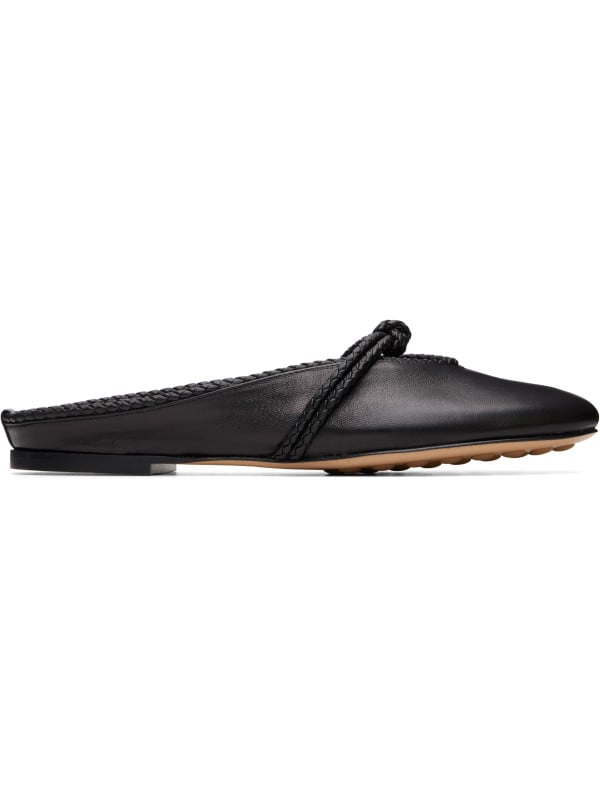
At the top of the price tier, the Bottega Veneta Black Rosa Mary-Jane Ballerina Flats at $1,760 push the strap detail into genuinely elevated territory — this is the version built for longevity rather than trend-chasing, closer in positioning to The Row‘s flat offering than to anything seasonal. If you’re going to spend four figures on a ballet flat, the Mary Jane strap is arguably the smarter buy over a plain ballerina, since it photographs as more considered and dates more slowly than a bare toe silhouette.
At the entry end, Boden’s Thea Mary Jane Ballet Flats — marked down to $147 from $245 — prove the strap detail translates at accessible price points too. It sits closer to French Sole’s ballet-specific range than to a general department-store flat, built around the silhouette rather than treating it as an afterthought.
Where to Be Selective: Leather and Markdown Timing
Not every ballet flat at this price point is equal, and the biggest variable buyers should weigh is leather quality versus discount depth. Rag & Bone’s Sophia Leather Ballet Flats are currently sitting at $279, marked down from $559 — exactly 50% off. That’s a meaningful discount on a leather flat from a brand whose pricing usually sits closer to premium contemporary than mass-market, and it’s worth moving on while that markdown holds rather than waiting for the regular price to return.
Boden’s Thea, by comparison, is a genuine everyday piece rather than an investment leather good — the $147 price point (down from $245) puts it in a similar bracket to Witchery’s leather flat offering rather than the designer tier. It’s the right pick for someone who wants the Mary Jane detail without committing designer-level spend, but it won’t have the same longevity as a full-grain leather construction from a house like Rag & Bone.
At the very top, Khaite’s Jane Ballerina Flats at $2,110 and Givenchy’s Black Crush Ballerina Flats at $1,665 are where buyers need to be honest about use case. These are not flats for daily commuting wear-and-tear — they’re the balletcore equivalent of an evening bag: worn selectively, stored carefully, and valued for the exclusivity of the print or construction rather than cost-per-wear.


The Designer End: Paying for Construction, Not Just the Name
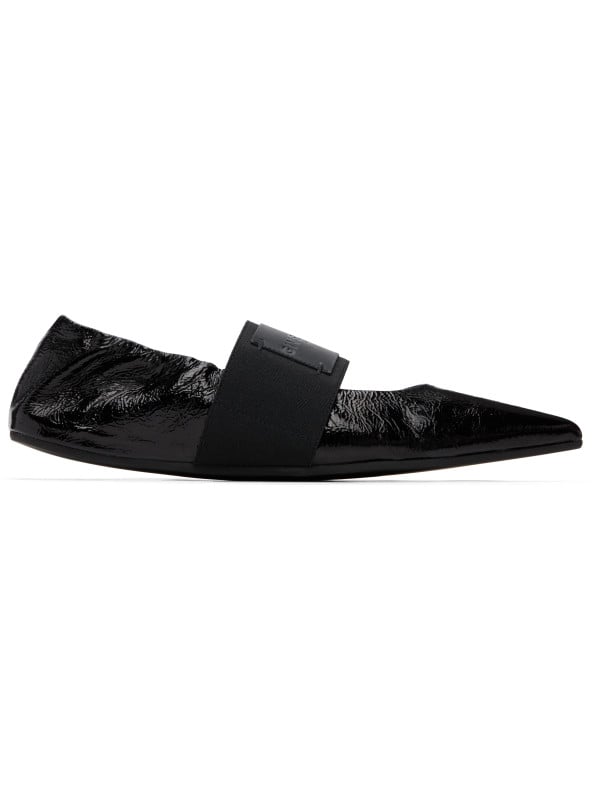
Givenchy’s Black Crush Ballerina Flats at $1,665 justify their price bracket through construction detail rather than logo visibility — the “crush” detailing on the toe is a signature design element, not a seasonal print that will read as dated in two years. That puts it in a different category to something like the Marc Jacobs Bleeckerina at $465, which trades on colour and immediacy rather than long-term investment value.
Khaite’s positioning is different again. At $2,110, the brand isn’t competing with Marc Jacobs or Ganni on accessibility — it’s competing with The Row and Manolo Blahnik’s flat range on quiet, unbranded minimalism. The black colourway and stripped-back silhouette are designed to disappear into a wardrobe rather than announce themselves, which is the opposite strategy to the Marc Jacobs piece. Buyers choosing between the two aren’t really choosing on price; they’re choosing between a statement flat and a foundational one.
Who This Trend Actually Suits
Balletcore rewards anyone who already dresses in a slightly pared-back, feminine register — midi skirts, tailored trousers, soft knits — since the flat’s low profile works best against clean lines rather than heavily layered or streetwear-driven outfits. It’s also a genuinely practical trend for Australian cities where a full workday might involve public transport, several flights of stairs, and no time to swap shoes: the flat sole solves the sneaker-to-heel problem without the compromise of a block heel.
Someone building a first balletcore piece is better served starting at the Boden or Rag & Bone end — both prove the silhouette works before committing further up the price ladder. Someone who already owns several pairs of classic ballet flats and wants a Mary Jane or crush-detail piece that will hold its place in a wardrobe for years is the right customer for Ganni, Bottega Veneta, Givenchy, or Khaite.
The trend suits less well anyone who needs all-day structured support — none of these are built with the arch support of a sneaker or the stability of a loafer, and full leather soles on cobblestone-heavy inner-city footpaths will show wear faster than a rubber-soled alternative. For that buyer, a loafer or a flat with a reinforced sole is the better fit than pure balletcore.
The Short Version
Ballet flats are past the point of being a passing micro-trend — the silhouette has been reinforced across enough runway seasons and price tiers that it reads more as a directional shift than a six-month fad, likely with at least two more years of relevance before it cedes ground to whatever replaces the current sneaker fatigue. The Mary Jane strap is the detail doing the most work across price points, from Boden’s $147 entry piece through to Bottega Veneta’s $1,760 leather version. Rag & Bone’s discounted Sophia flat is the sharpest value play right now given the 50% markdown, while Khaite and Givenchy are for buyers treating the flat as a long-term wardrobe anchor rather than a seasonal buy. Explore the full edit of ballet flats and Mary Jane styles on Miss Nelly Boutique to find where your own wardrobe sits on that spectrum.
Liked this?
Read our Spring 2026 Style Report — then get picks like these every Thursday from 800+ brands.
Join The Edit →