
Saturday morning, wardrobe doors open, and there’s that dress at the back — the one bought for a wedding in Byron Bay eighteen months ago that’s been re-worn for every occasion since because it photographs beautifully and never creases in the overhead locker. That’s the gap Amanda Uprichard has quietly built a business around: the maxi dress you buy once and reach for on repeat.
The Los Angeles label sits in occasion contemporary territory — not fast turnover, not high-end runway, but the tier where a $400-500 dress needs to earn its keep across engagement parties, long lunches and destination weddings. It’s the same bracket occupied by NICHOLAS, Elliatt and Staud, and Amanda Uprichard holds its own there through print exclusivity and a fit philosophy built around the body rather than the runway silhouette.
The Maxi Dress Is the Whole Point
Look at the range and the pattern is obvious: this is a maxi dress label first, everything else second. The Irena Maxi Dress ($468) is the clearest example of the house signature — a floor-length silhouette with the kind of print placement that suggests real thought went into where the pattern lands on the body, not just a repeat scaled up.
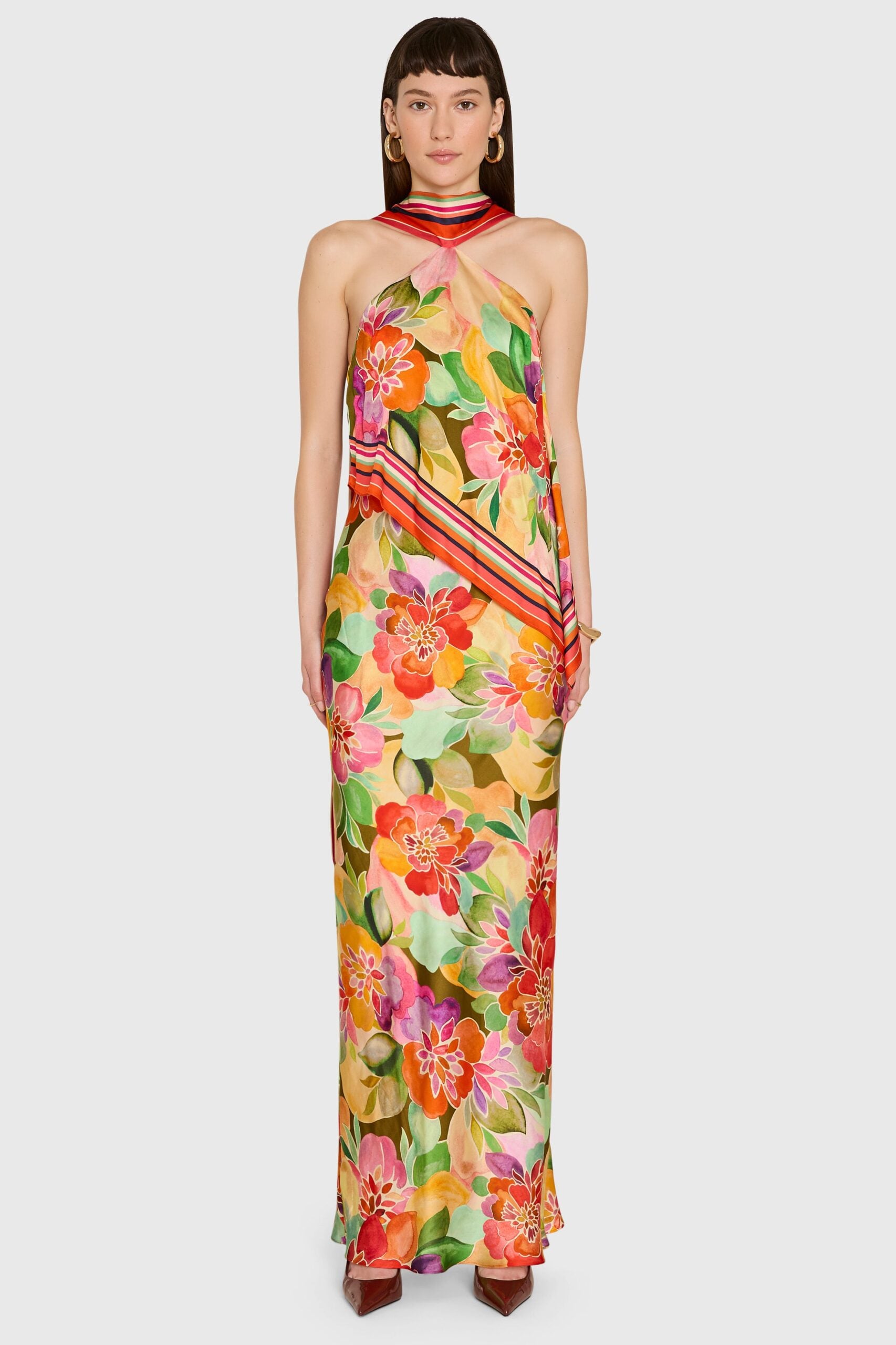
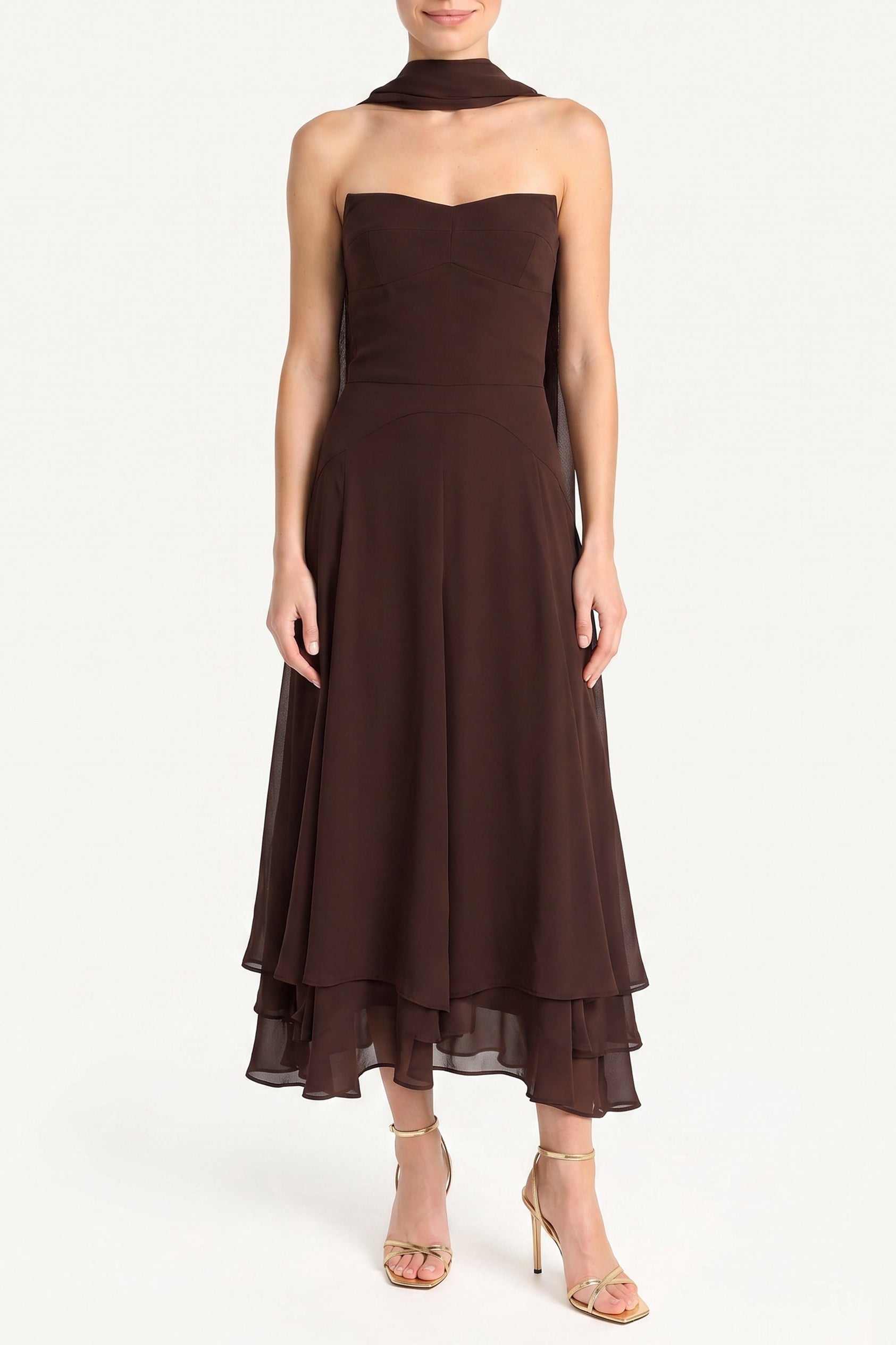
The Monterey Dress With Scarf ($416) shows the label’s habit of building in a detail that earns the price — here, an attached scarf that changes the neckline options rather than sitting as a throwaway accessory. At the top of the range, the Ophelia Maxi ($549) is the most considered piece in the lineup — the price reflects a dress designed to be the outfit, not a supporting layer.
These aren’t $80 fast-fashion maxis dressed up in better photography. The price gap is doing real work — better draping through the skirt, prints that don’t repeat across three other labels’ racks, and construction meant to survive more than one summer.
Beyond the Maxi: Tops, Rompers and Tailoring
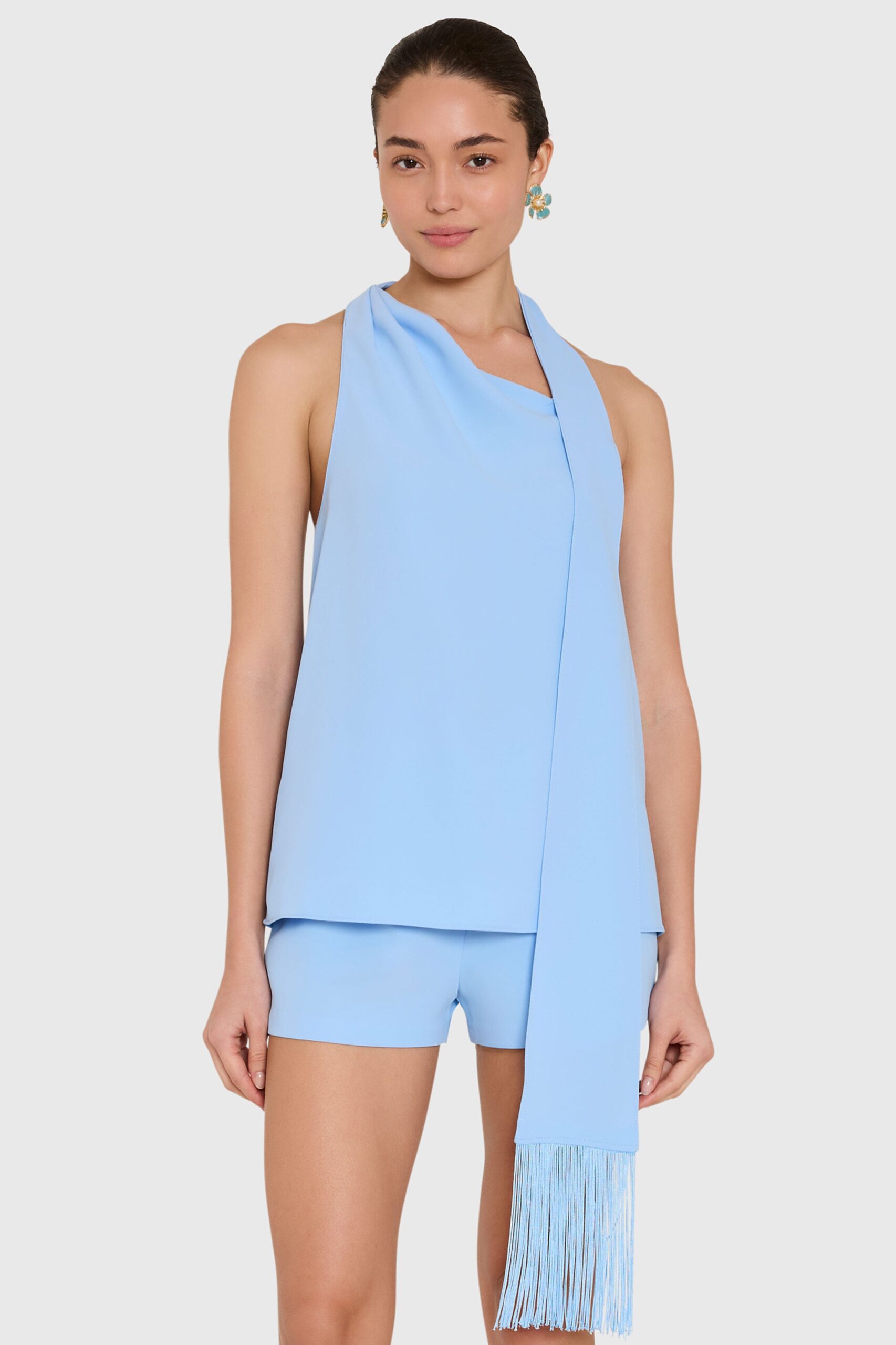
The rest of the range plays a supporting role but isn’t an afterthought. The Sonya Fringe Top ($279) is the easiest entry point into the brand — a baby blue top with fringe detail that works as a going-out piece without the commitment of a full-length dress purchase.
The Strapless Bethany Romper ($379) is worth flagging for anyone who finds maxi dresses impractical for daytime events — it delivers the same occasion-ready polish in a shorter, more mobile format. The Grady Blazer ($429), in a brown Montana print, is the outlier in the range: proof the label can do structured tailoring, not just soft-draped dressing, though it’s a smaller part of the catalogue than the dresses that built the brand’s reputation.

Also worth a look: the Spencer Midi Dress in a bayhaven stripe ($429), the Willow Maxi in deep sea ($429), and the Samara Maxi in evening rose ($419) — three dresses at nearly identical price points that make the case this brand has settled into a comfortable pricing rhythm rather than chasing markup on “statement” pieces.
How Amanda Uprichard Actually Fits
Fit runs true to size across the maxi dresses, with most styles built around a defined waist and a fuller skirt — a silhouette that favours anyone who wants shape without a fitted bodice dictating the whole look. The strapless pieces, like the Bethany Romper, rely on structured boning rather than elastic alone, which matters for anyone who’s been burned by strapless styles sliding through a long lunch.
The scarf detail on the Monterey Dress adds a sizing consideration worth noting before buying: it changes how the neckline sits depending on how it’s tied, so it’s worth trying a few configurations rather than assuming one fixed look. For blazers like the Grady, sizing up slightly gives room to layer over the label’s own strapless dresses — a combination this brand seems to design for, given how often the tailoring and dress ranges echo each other’s prints.
Is the $400-500 Price Bracket Worth It Here?
At $216-$549, Amanda Uprichard prices itself squarely against NICHOLAS and Elliatt rather than reaching for a Zimmermann-level premium — and that positioning makes sense once you look at what’s driving the cost. This is a print-led, dress-led brand; the value proposition is exclusivity of pattern and a fit that’s been refined across many seasons of the same core silhouettes, not experimental fabrication or hand-finishing that would justify a jump into the $700+ tier.
Compared to NICHOLAS, which leans more minimal and monochrome, Amanda Uprichard is the louder, print-forward option — better suited to buyers who want the dress to be the statement rather than the backdrop for jewellery or a strong lip. Compared to Staud, which plays with structural, sculptural shapes, Amanda Uprichard is softer and more romantic, built for draping rather than architecture. If your wardrobe already leans toward Staud’s boxier silhouettes, this brand will feel like a genre shift rather than a natural extension.
The Kerry Velvet Midi Dress ($309.88, down from $453.82) is the clearest value entry point in the current edit — a REVOLVE collaboration piece in black velvet that brings the label’s evening-dress sensibility down closer to the $300 mark without moving into a different fabric tier.

Building an Amanda Uprichard Wardrobe Without Overbuying
Start with one maxi dress in a print that isn’t tied to a single season — the Irena or Willow both work here — before adding a strapless piece like the Bethany Romper for shorter, warmer-weather events. The Sonya Fringe Top is the smartest low-commitment purchase in the range: it lets a new customer test the brand’s fit and finish at under $300 before deciding whether the full-price maxi dresses are worth the investment.
This brand rewards buyers who already know their event calendar for the next twelve months — weddings, milestone birthdays, resort trips — because the dresses are distinct enough to be recognisable if worn twice in front of the same crowd within a few months. For someone shopping for one adaptable dress a year, the Ophelia Maxi or Monterey Dress with Scarf are the pieces most likely to earn repeat wears across different occasions, thanks to detailing that changes how each one reads depending on styling.
Anyone building a capacity wardrobe of quieter, repeatable basics may find NICHOLAS a better fit for everyday rotation — but for the reader who wants the dress that gets remembered, Amanda Uprichard is doing exactly what it set out to do.
Liked this?
Read our Spring 2026 Style Report — then get picks like these every Thursday from 800+ brands.
Join The Edit →