
Saturday morning, flipping through your wardrobe for the fourth time, convinced you own nothing worth wearing. Sound familiar? That’s not a wardrobe problem — it’s a capsule problem. The idea that less is more only works when ‘less’ actually speaks to each other. What makes a capsule work in 2026 isn’t minimalism for its own sake — it’s the edit. It’s choosing pieces that layer, repeat, and shift context without looking like a uniform. And across Australian brands right now, that strategy spans $48 Rolla’s denim to $749 St. Agni leather, with everything in between doing real lifting.
The capsule wardrobe isn’t new, but the execution has changed. Gone are the rigid ten-piece formulas and beige-on-beige Instagram grids. The current approach pulls from workwear structure, resort ease, and the kind of basics that cost more than you’d expect — because they’re cut to last longer than two seasons. It’s less about owning fewer things and more about owning fewer wrong things.
What’s Driving the Capsule Shift in 2026
Three forces are shaping how Australians build wardrobes right now. First, the post-pandemic closet cleanout never really ended. People got used to rotating five good pieces instead of 50 mediocre ones, and they’re not going back. Second, cost-per-wear logic has moved mainstream. Spending $200 on a tee sounds wild until you realise it replaces four $50 ones that pill after three washes. Third, rental and resale platforms made high-ticket items less intimidating — you can trial a $700 skirt before committing, or sell it on if it doesn’t earn its keep.
The result: Australians are buying less frequently but spending more per piece, and brands are responding with elevated basics that justify the price jump. SPRWMN’s $205 baby tee isn’t positioned as a luxury splurge — it’s marketed as the last white tee you’ll need to buy for three years. Whether that’s true depends on your washing habits, but the framing works.

The Foundation Layer: What Actually Gets Worn
Every capsule starts with the pieces you reach for without thinking. The SPRWMN White Cotton Baby Tee at $205 occupies that space for a specific cohort: the customer who’s tired of replacing Kmart tees every season and wants something that holds its shape. The construction is noticeably heavier than mass-market cotton, with reinforced seams that don’t twist after washing. Worth noting: this isn’t a relaxed fit — it’s cropped and fitted, designed to sit high on the waist under tailoring or over high-rise denim. If you prefer an oversized tee, this won’t deliver.
On the opposite end, the MIKUTA Black Ribbed Longsleeve at $105 (marked down from $210) offers a more versatile silhouette. The ribbed texture adds enough visual interest to wear solo, but the real value is in layering — under slip dresses, blazers, or chunky knits. The fit runs true to size with a slightly longer torso, which works well for Australian proportions. At full price, it’s competing with Bassike and Venroy; at sale price, it’s one of the smarter buys in this category.

The Rag & Bone Slub Vee at $169 sits between these two extremes. The slub cotton gives it a lived-in texture from day one, which either reads as effortlessly cool or slightly scruffy depending on how you style it. Paired with tailored trousers and loafers, it leans French-casual; with joggers, it’s weekend uniform. The v-neck is deeper than SPRWMN’s crew, which changes how it layers — better with necklaces, less effective under blazers.

The Denim Anchor: Rolla’s vs. Premium Alternatives
If there’s one category where capsule wardrobes live or die, it’s denim. The Rolla’s Heidi Low Jean in Dark Stone at $47.99 is the entry point here — a straight-leg, low-rise silhouette in a dark, non-distressed wash. The price reflects Rolla’s position as accessible Australian denim: good enough to wear three times a week, not precious enough to baby. The fabric is 100% cotton with minimal stretch, which means it’ll soften and mould over time but won’t bounce back like elastane blends. Expect some knee bagging after a full day’s wear.
For context, this sits well below Agolde ($230–$280) and Re/Done ($350+), but above Levi’s Ribcage ($150–$180). The difference shows in construction details: Rolla’s uses simpler stitching and thinner denim (around 10–11oz vs. 12–14oz for premium brands), which makes them lighter and easier to break in but less durable over years of heavy rotation. If you wash denim after every wear, Rolla’s will fade faster. If you’re a freeze-and-spot-clean type, they’ll hold up fine.
The styling range here is broad: cropped knits and ballet flats for a Parisian-leaning look, oversized shirts and sneakers for weekend ease, or blazers and heels for the polished-casual office. The dark wash is the key — it’s formal enough for most settings without reading as “trying too hard.”
Knitwear That Does Double Duty
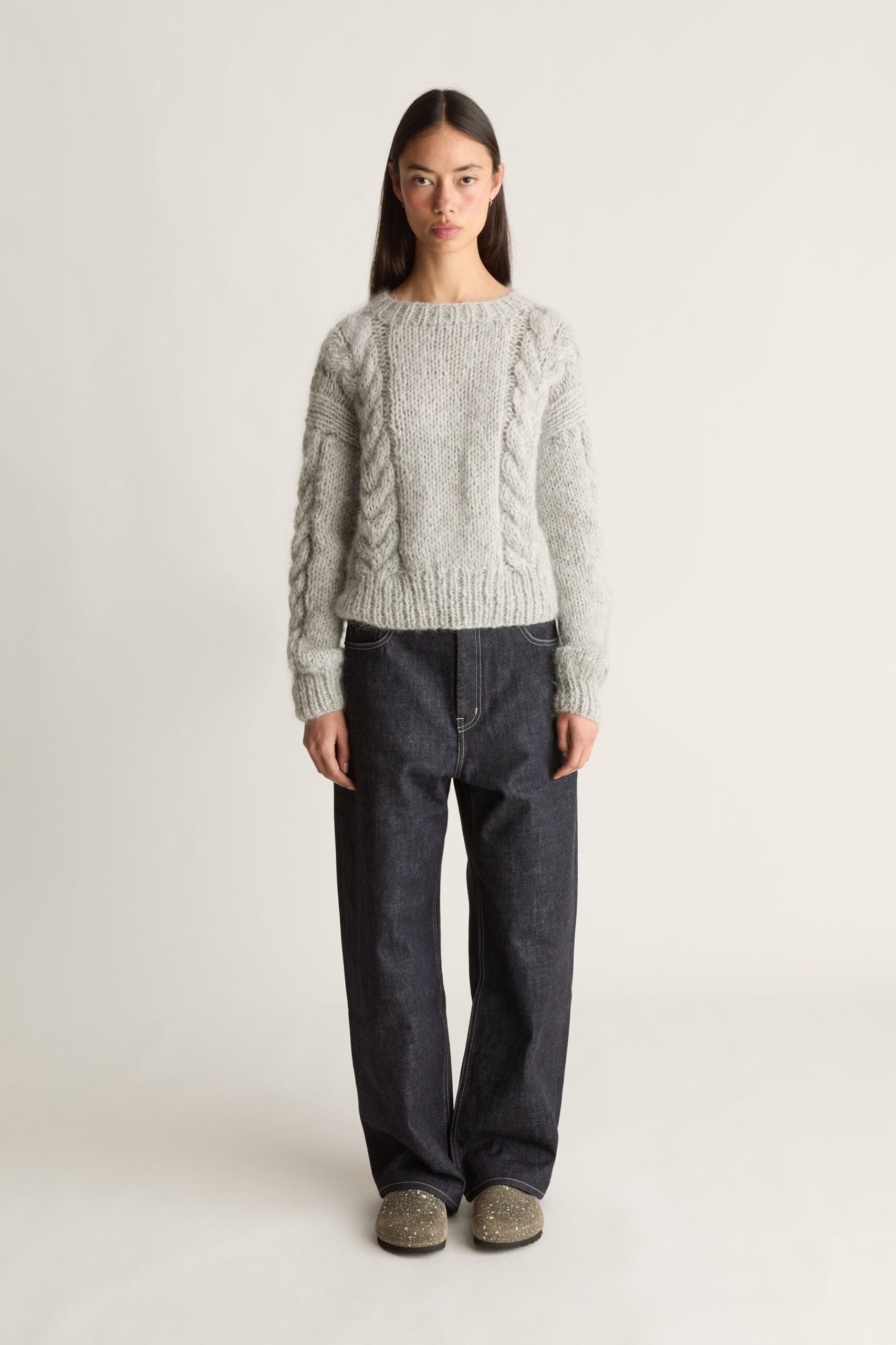
The Rolla’s Haven Sweater at $59.98 is the kind of piece that doesn’t photograph well but earns its place through sheer repetition. It’s a mid-weight knit in a neutral tone (the listing doesn’t specify exact colour, but the image suggests oatmeal or sand), with a slightly boxy fit that works over shirts or solo with high-waisted bottoms. The knit gauge is loose enough to feel relaxed but tight enough to avoid looking sloppy — a balance that’s harder to hit than it sounds.

At under $60, this competes with Country Road’s basics range ($80–$120) and undercuts Camilla and Marc’s knits ($200+). The trade-off is in fabric blend and longevity. Rolla’s knitwear typically uses acrylic-wool blends rather than pure merino, which means it’s less prone to pilling but also less breathable. For mild Sydney or Melbourne winters, that’s fine. For Canberra or Tasmania, you’ll want something heavier.
The Rag & Bone Miramar Long Sleeve Tee at $389 occupies a completely different space. This is a long-sleeve knit tee, not a sweater — lighter weight, more refined, designed to sit under tailoring rather than over it. The price reflects Rag & Bone’s positioning as elevated American basics with a European sensibility. Whether that justifies a $330 jump over the Rolla’s sweater depends on how much you value fabric hand-feel and subtlety of fit. The Miramar is cut closer to the body with a longer torso and narrower sleeves, which reads as more intentional but less forgiving if your proportions don’t align.

The Pencil Skirt Spectrum: Suiting to Leather
Pencil skirts are having a quiet resurgence, driven by the return of tailoring and the shift away from athleisure as default workwear. The Veronika Maine Stretch Suiting Pencil Skirt at $189 is the practical entry point: a mid-weight stretch fabric that moves with you, a midi length that clears office dress codes, and a fit designed for Australian sizing (which runs slightly more generous through the hips than European cuts).

The stretch suiting fabric is the differentiator here. It’s not the stiff, unforgiving wool of traditional pencil skirts — it’s a poly-viscose-elastane blend that behaves more like ponte than true suiting. That makes it comfortable for all-day wear and easy to care for (machine washable, minimal ironing), but it won’t hold a crisp line the way a tailored wool skirt does. For desk-to-dinner occasions, that’s a feature, not a bug. Pair it with knits for a softer look or tailored blazers for full suiting.
Veronika Maine’s pricing sits between Witchery ($100–$140) and Scanlan Theodore ($300–$450), which positions it as “better than high-street, not quite contemporary designer.” The fit runs true to size with a slight A-line through the hem to ease movement — a practical detail that distinguishes workwear from occasion pieces.
At the opposite end of the spectrum, the St. Agni Brushed Leather Pencil Skirt in Black at $749 is an investment piece in the truest sense. This is brushed leather — softer and less shiny than patent, more textured than smooth nappa — with a fitted silhouette that requires confidence to pull off. The price reflects both material cost (quality leather vs. synthetic suiting fabric) and St. Agni’s positioning as a quiet-luxury Australian brand.

Worth noting: leather pencil skirts are high-maintenance. They require professional cleaning, they’re unforgiving in fit (no stretch), and they make a statement whether you intend to or not. This isn’t a piece you throw on for a casual Friday — it’s for the customer who wants to anchor an outfit around one strong element and keep everything else minimal. Pair it with a simple white tee and loafers, or a fine-knit sweater and boots. Anything busier and you’re overdoing it.
For comparison, Bassike’s leather skirts start around $650, while Khaite (if importing) pushes past $1,200. St. Agni’s $749 sits comfortably mid-tier for this category, assuming the leather quality holds up. The brand’s Australian manufacturing and relatively transparent supply chain justify the premium over mass-produced alternatives, but this is still a piece you buy once and wear for years, not a trend experiment.
Who This Capsule Strategy Suits Best
The $48–$749 range featured here isn’t random — it reflects how real capsule wardrobes are built in 2026. You don’t need every piece to cost $700, but you also can’t build longevity on $50 basics alone. The sweet spot for most Australian shoppers is a mix: accessible denim and knitwear from Rolla’s ($50–$100), mid-tier suiting and tees from Veronika Maine and MIKUTA ($100–$250), and one or two investment anchors like St. Agni leather or SPRWMN tees ($200–$750).
This approach works best for:
- The work-from-home professional returning to office — You need versatile pieces that transition from Zoom-appropriate to client-facing without a full outfit change. The Veronika Maine skirt and Rag & Bone knits handle this seamlessly.
- The seasonal purger looking to buy less, better — If you’re tired of donating bags of Zara every six months, shifting budget to fewer, higher-quality pieces will feel like a revelation. Start with the Rolla’s denim and MIKUTA longsleeve, then add investment pieces as budget allows.
- The minimalist who still wants texture and interest — A capsule doesn’t have to mean boring. The St. Agni leather skirt, SPRWMN’s precision-cut tee, and Rag & Bone’s slub cotton all bring visual variety without pattern or colour chaos.
This strategy is less effective for:
- Trend-driven dressers who love seasonal newness — If you’re energised by rotating trends every three months, the capsule logic will feel restrictive. Brands like Dissh, Meshki, or Princess Polly offer faster, cheaper turnover that aligns better with that approach.
- Size-fluctuating wardrobes — Investment pieces assume stable sizing. If you’re in a life stage where your body changes frequently (postpartum, health shifts, etc.), prioritising flexibility over longevity makes more sense. Stick to Rolla’s and Veronika Maine’s stretch options until things stabilise.
- Budget-first shoppers — If $189 for a skirt feels genuinely unaffordable rather than just “a stretch,” this isn’t the framework to force. Better to build slowly with Uniqlo, Everlane, or COS and upgrade selectively over time.
The Price-Per-Wear Reality Check
Let’s run the numbers on two extremes here. The Rolla’s Heidi Low Jean at $47.99: if you wear it once a week for a year, that’s roughly $0.92 per wear. After two years, it’s under $0.50. Even if the denim fades or the knees bag out by year three, you’ve extracted serious value.
The St. Agni leather skirt at $749 requires a longer timeline to justify. Worn twice a month for two years, that’s 48 wears at $15.60 each. By year five (120 wears), you’re down to $6.24 per wear — still higher than the Rolla’s jeans, but competitive with buying three cheaper skirts over the same period. The caveat: this math only works if the skirt actually lasts five years and you don’t get bored of it. Leather has staying power both materially and aesthetically, which helps, but it’s not a guarantee.
The SPRWMN tee at $205 is the hardest sell on paper. Even at weekly rotation for two years (104 wears), you’re at $1.97 per wear — nearly double the Rolla’s jeans on a per-wear basis. The argument for it isn’t cost efficiency; it’s opportunity cost. If you’ve bought and discarded ten $20 tees in the past three years because they stretched, pilled, or greyed, the SPRWMN starts to look like the fiscally responsible choice. But if you’re happy replacing basics seasonally, the premium doesn’t pencil out.
Alternatives for the Price-Conscious Capsule Builder
If the $200+ pieces here feel out of reach, several Australian and international brands offer similar capsule-friendly silhouettes at lower price points:
- Uniqlo — The U collection’s merino knits ($80–$100) and linen shirting ($60–$80) compete with Rolla’s quality at slightly lower prices. Sizing runs smaller, so size up if between measurements.
- COS — The tailored trousers ($120–$160) and organic cotton tees ($40–$60) mirror Veronika Maine’s aesthetic at 20–30% less. Limited Australian stockists, but online shipping is reliable.
- Everlane (via international shipping) — The Japanese GoWeave suiting ($140–$180 USD) and cashmere basics ($100–$150 USD) offer transparent pricing and solid construction. Factor in shipping and duties, and you’re still under SPRWMN and Rag & Bone.
- Bassike (on sale) — Full-price Bassike ($200–$400) rarely makes sense for capsule building, but end-of-season sales (50–70% off) bring prices in line with Veronika Maine. Stock moves fast, so this requires timing and flexibility on colour.
How Long This Approach Lasts
Capsule dressing isn’t a micro-trend — it’s a behavioural shift that’s been building since 2020. The pieces featured here (dark denim, neutral knits, tailored skirts, basic tees) have been wardrobe staples for decades; what’s changed is the willingness to pay more for better versions. That underlying logic isn’t going anywhere.
What will shift is the specific silhouettes. Low-rise jeans like the Rolla’s Heidi are trending now, but high-rise dominated 2022–2024 and may return. Pencil skirts are resurging after years of midi and maxi dominance, but that pendulum swings. The smarter investment is in pieces defined by quality and versatility rather than on-trend cuts. A well-made merino knit in a neutral tone will outlast three trend cycles. A perfectly-cut leather skirt will survive longer than the current tailoring wave.
If you’re building a capsule in 2026, prioritise fabric and construction over silhouette. Buy the best version of the basics you know you wear, not the trendy shape you think you should wear. And when in doubt, go for the piece that works across three contexts — office, weekend, dinner — rather than the one that only shines in perfect lighting.
Shop New Season at Miss Nelly


💌 Get the Weekly Style Edit
Curated fashion picks, new brand alerts, and sale notifications. Delivered every Wednesday.
Shop the Edit at Miss Nelly

Liked this?
Read our Spring 2026 Style Report — then get picks like these every Thursday from 800+ brands.
Join The Edit →